

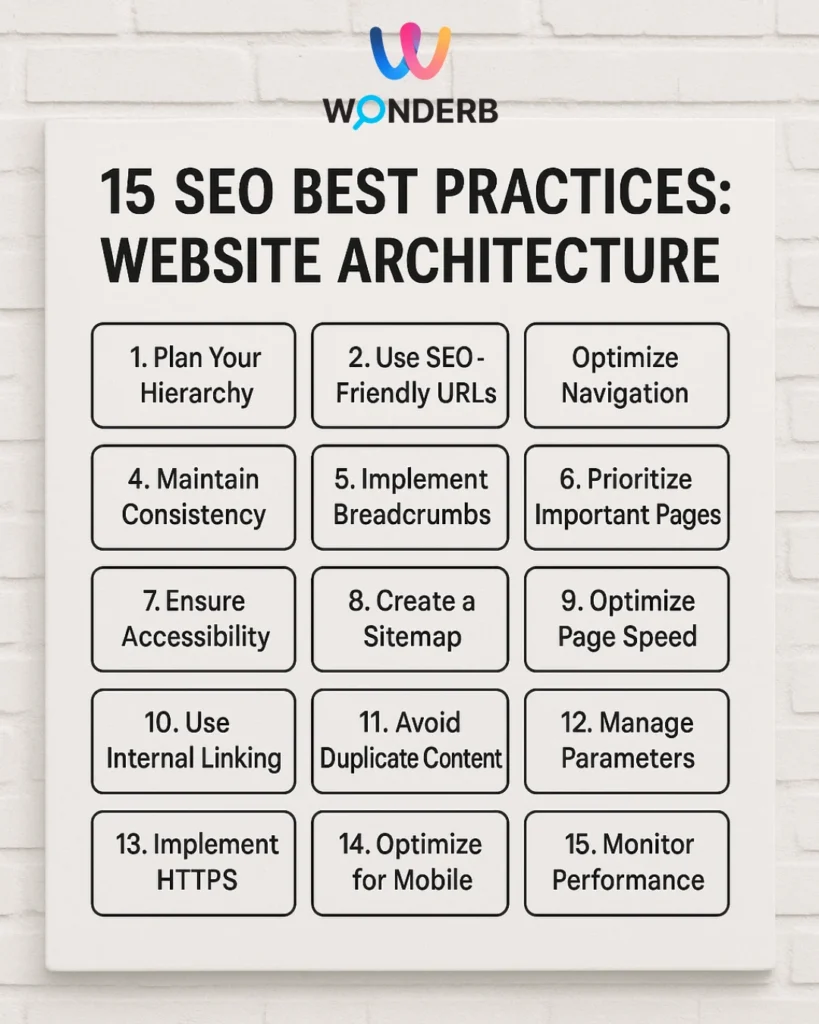
15 SEO Best Practices: Website Architecture
Why Website Architecture Matters in SEO
15 SEO Best Practices: Website Architecture is a complete guide to building a site structure that supports higher rankings, faster crawling, and better user experience. A strong website architecture is the backbone of SEO — helping search engines understand your content while guiding visitors seamlessly through your pages.
Website architecture is more than just design — it’s the foundation of how users and search engines navigate your site. In 2025, search engines like Google emphasize user experience (UX), crawlability, and site performance more than ever.
A well-structured website helps:
-
Search engines index your content efficiently
-
Users find content faster
-
Reduce bounce rate and increase engagement
-
Improve rankings and trust
If your website feels like a maze, even the best content won’t save you.
Let’s dive into the 15 best practices to future-proof your SEO.
1. Use a Flat Site Structure
Keep your important pages no more than 3 clicks from the homepage. This helps both users and search engines navigate easily.
2. Design a Clear URL Structure
Use short, keyword-rich URLs like:yourdomain.com/seo-best-practices
Avoid:yourdomain.com/index.php?id=12345
Clean URLs help with indexing and user trust.
3. Implement a Logical Hierarchy
Group related pages under clear categories or subfolders. For example:/digital-marketing/seo/website-architecture
4. Use Internal Linking Strategically
Internal links pass link equity and guide visitors.
✅ Link from high-authority pages to new or low-traffic pages
✅ Use descriptive anchor text
📌 See our guide to content marketing strategy (inbound)
5. Create an HTML Sitemap
An HTML sitemap improves UX and assists search engine bots in crawling important pages.
6. Prioritize Mobile-First Design
Google now indexes mobile versions first. Make sure:
-
Pages load quickly on mobile
-
Menus are accessible
-
Buttons are finger-friendly
7. Optimize Site Speed
Use tools like PageSpeed Insights to analyze your load time.
Compress images, enable browser caching, and minimize JS/CSS files.
✅ Check PageSpeed Insights (outbound)
8. Use HTTPS
Security is a ranking factor. Ensure your website has an SSL certificate.
9. Avoid Duplicate Content
Duplicate pages confuse search engines. Use canonical tags where necessary.
10. Include a Robots.txt File
Guide search bots on what to crawl (or not). Prevent access to unimportant or duplicate pages.
11. Use Breadcrumb Navigation
Breadcrumbs improve site navigation and give users a clear path back to higher-level pages.
12. Utilize Schema Markup
Schema helps search engines understand your content and enhances rich snippets in SERPs.
13. Prioritize Accessibility (A11y)
Accessible websites perform better in search:
-
Use ALT tags
-
Proper heading hierarchy
-
Keyboard navigation
14. Use Clear and Descriptive Titles
Make sure your menu and page titles are keyword-optimized and user-friendly.
15. Test Regularly
Use tools like Google Search Console and Screaming Frog to:
-
Identify broken links
-
Crawl errors
-
Redirect issues
Final Thoughts: Structure = SEO Success
Your website’s architecture is the blueprint of your online success. Without a strong structure, even great content will struggle to rank. Follow these 15 SEO website architecture best practices to:
-
Increase your organic visibility
-
Improve user experience
-
Reduce bounce rates
-
Gain higher trust from Google and your visitors
Start optimizing today — your future search rankings depend on it!